Dear Sir and Madam,
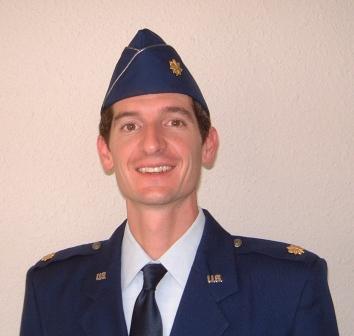
We don’t know who you are, but we want to thank you. It was so generous of you to pay for our dinner at Le Reve last night. It was the Fourth of July, but we were actually there to celebrate our wedding anniversary. It is one of the high points of our year to visit Andrew and Maureen for a wonderful meal. We didn’t mean for you to overhear that I had returned from my second trip to Iraq this year. The staff knows that I was away and it seemed like each of them individually asked if I was going to have to go back. When you wished me a good evening as you left, I naively took it to be a simple farewell. Meredith asked if we had been talking while she was in the ladies’ room, but I told her that I thought it was just a warm greeting from another friendly diner. At the end of the evening, when the staff told us that you had taken care of our bill, I was dumbstruck. Meredith was so surprised and thankful that she couldn’t keep back tears. It really was far too generous, and wholly not necessary. When I do my military service, I am just doing a job, same as everyone else. It is something I chose of my own free will. Andrew and Maureen have promised they will try to convey our thanks to you. You gave us a very happy Fourth of July.
Chris and Meredith
05 July 2008


03 July 2008
Why she plays
Hi, I wanted to tell you all about an incredible new book written by my cousin, Christine Baker, that is being released in August. "Why She Plays" is about all aspects of women's basketball. It is a subject that Christine has lived through and through for most of her life. Besides playing during school, she has covered the WNBA as a journalist. I have had a chance to read some of Christine's work, and it is amazing how she can relate both the excitement and the spirituality of the game. Please check out her website for more information about the book:
www.whysheplays.com
www.whysheplays.com
24 May 2008
Everything I needed to be a surgeon I learned in kindergarden
A friend sent this interesting article from the New York Times. It describes several hospitals that experienced decreased malpractice claims and settlement amounts after adopting a policy of full disclosure of complications and apologizing to the patient. Was there any doubt about this concept? It surprises me that anyone would ever follow a policy of concealment and refusal to apologize. There's another word for that: LYING. Miss Forgetta in kindergarten told us that lying is wrong and we should apologize when we hurt someone. Before that, my mother taught me the duty to the truth.
Besides being bad manners, a policy of concealment just doesn't work. If something goes wrong, the patient always finds out. It is in the medical record, unless for some practitioners concealment extends to covering their tracks in the chart. Even if the surgeon doesn't tell the patient's family, there is always another doctor or nurse who advises them to look a little closer at the details when something has been withheld. Once a doctor has lied to a patient or their family, their statements and judgement will always be suspect. The teamwork between doctor and patients requires trust on both parts. I trust my patient's parents when they say that they have never had their appendix removed. I believe them when they say they are allergic to a drug and I don't give them that drug. When parents doubt my assessment of a child's illness and the plan I propose, I encourage them to double check me with other doctors or information on the Internet. But if they cannot trust what I have said, I tell them that it is time for them to find another doctor they do trust, and I will help them. (That can be tough sometimes, since I'm currently the only pediatric surgeon stationed at an Air Force hospital, worldwide, but there is always a way!) I cannot promise that things will always go well, but I can guarantee them that they will always get the truth from me.
I hate when complications happen after surgery. Every surgeon does. After a complication, it is hard to look the patient and their parents in the eyes. It is hard enough to see a child suffering from the effects of illness, but when I know that my mistake has added to that suffering, it is torture. I performed an appendectomy on one child whose appendix had burst and had endured several days of pain and fever. I used the laparoscope, and it was somewhat difficult to tease apart the swollen and infected tissues, but when it was over, his appendix was out, and he had three tiny cuts on his belly.
As the days went by, he continued to get fevers longer than I expected. A CT scan showed that even though the appendix was gone, a small fecalith, a hardened pellet of stool, was still in his belly and had a small infection around it. I sat down with his mother, and told her exactly what had happened. I told her that a second operation was necessary to fix what I had left unfinished. I apologized to her and her child because my error had prolonged his illness. She had the choice to request to be transferred to another hospital, but for whatever reason, she allowed me to perform the second operation. After the fecalith was out, his recovery moved along nicely.
It never would have occurred to me to hide the truth from this family. Abscesses are common after a perforated appendicitis. It would have been very easy to describe the infection as a result of the disease. But the truth was he would not have remained sick if I had taken that pellet out during his first operation. That is why it amazed me to read in the article that hospitals and lawyers were heralding this policy of disclose and apologize as a practice they were going to teach doctors. If they aren't using that policy already, they aren't the kind of doctor I would want for my family.
Besides being bad manners, a policy of concealment just doesn't work. If something goes wrong, the patient always finds out. It is in the medical record, unless for some practitioners concealment extends to covering their tracks in the chart. Even if the surgeon doesn't tell the patient's family, there is always another doctor or nurse who advises them to look a little closer at the details when something has been withheld. Once a doctor has lied to a patient or their family, their statements and judgement will always be suspect. The teamwork between doctor and patients requires trust on both parts. I trust my patient's parents when they say that they have never had their appendix removed. I believe them when they say they are allergic to a drug and I don't give them that drug. When parents doubt my assessment of a child's illness and the plan I propose, I encourage them to double check me with other doctors or information on the Internet. But if they cannot trust what I have said, I tell them that it is time for them to find another doctor they do trust, and I will help them. (That can be tough sometimes, since I'm currently the only pediatric surgeon stationed at an Air Force hospital, worldwide, but there is always a way!) I cannot promise that things will always go well, but I can guarantee them that they will always get the truth from me.
I hate when complications happen after surgery. Every surgeon does. After a complication, it is hard to look the patient and their parents in the eyes. It is hard enough to see a child suffering from the effects of illness, but when I know that my mistake has added to that suffering, it is torture. I performed an appendectomy on one child whose appendix had burst and had endured several days of pain and fever. I used the laparoscope, and it was somewhat difficult to tease apart the swollen and infected tissues, but when it was over, his appendix was out, and he had three tiny cuts on his belly.
As the days went by, he continued to get fevers longer than I expected. A CT scan showed that even though the appendix was gone, a small fecalith, a hardened pellet of stool, was still in his belly and had a small infection around it. I sat down with his mother, and told her exactly what had happened. I told her that a second operation was necessary to fix what I had left unfinished. I apologized to her and her child because my error had prolonged his illness. She had the choice to request to be transferred to another hospital, but for whatever reason, she allowed me to perform the second operation. After the fecalith was out, his recovery moved along nicely.
It never would have occurred to me to hide the truth from this family. Abscesses are common after a perforated appendicitis. It would have been very easy to describe the infection as a result of the disease. But the truth was he would not have remained sick if I had taken that pellet out during his first operation. That is why it amazed me to read in the article that hospitals and lawyers were heralding this policy of disclose and apologize as a practice they were going to teach doctors. If they aren't using that policy already, they aren't the kind of doctor I would want for my family.
Subscribe to:
Posts (Atom)

 Feedburner Link


