05 November 2007

A friend returns victorious

A small dear patient who recovered from a serious burn <returns victorious.JPG>>

6 NOV 2007

Hi Friends,

I'm sorry I haven't written in a bit, but I've been running on little sleep and less free time. We haven't had a large number of patients, but the ones we have kept us busy. Last night I returned from dinner and Thoracic surgeon J. called us over to see a new patient's CT scan. He was an eight year old boy, who like many of the Iraqi children was thin and appeared much younger than he was. Earlier that day, he had been playing on a stairwell with his brother, when his brother pushed him over the railing. He fell nearly one story, breaking his fall over a short retaining wall. He cried a bit, but got up and was able to walk to his home.

Throughout the afternoon, he felt well and seemed to be acting himself. When his family gathered for dinner, he tried to eat some bread but started having belly pain and vomited. His father took him to a doctor in the neighborhood who advised getting him to the US base as quickly as possible.

In our emergency room, he lay on a stretcher and was in obvious discomfort. His belly was bloated and painful. Whenever anyone examined him, he would cringe as they touched his belly and tried to push their hands away. His pulse was strong but rapid. He went through the tube of the CT scanner, which gave us images of the inside of his belly that look much like slices of a bread loaf. On these images, we could see bubbles of air that had leaked out of his intestine along his spine and a lot of liquid sloshing around in his belly.

We brought him to the operating room just after getting intravenous catheters in his arms. He was quickly asleep and the nurses prepared his belly for surgery with a brown iodine solution. As soon as Laparoscopic surgeon S. and I opened his belly, liters of a brown liquid poured out. Fortunately there was no bleeding, but his intestines and fat were irritated because they had been soaking in the fluid for hours. The fluid was comprised of his digestive juices, saliva, stomach acid, and a solution like lye from his pancreas. There is a short tube that connects the stomach and the long loops of intestine called the duodenum, and it had burst open like a Christmas popper. The fluid from the pancreas had started to eat away at his insides, turning some of the fat in his belly into a pasty white solution like soap. The surface of his intestines was red with broken blood vessels. This type of injury is a challenge to treat, because the duodenum doesn't heal well. The digestive juices are so strong at this location that they will often eat through any repair that a surgeon makes. We were forced to close off the exit of his stomach with stitches and create a detour from his stomach to a location  downstream in his intestine. This simple blowout of his intestine required nearly three hours of surgery.

After the operation, the boy lay in his bed with tubes sticking out of holes in his belly. I explained to his father this red tube is to feed him, this yellow one is to drain the stomach acid from the duodenum, and this clear one is to catch any contaminated fluid that might leak out. He stoically watched his son and listened to me, but I could see the worry in his furrowed brow. "How long before he can eat with his mouth?", he asked; "When can he go home?" I've been taught by professors wiser than me not to promise a result in the face of an uncertain future. Don’t give the parents an artificial deadline upon which they will set their hopes. Another attending described it as leaving yourself a big back door. So I told him that his boy's life was in danger, but he should be hopeful, as I was. I said that I knew if he survived, which I expected him to, he would be in the hospital for weeks and possibly months, maybe even needing more surgery. I told him I did not know when his boy would eat, but that we would be monitoring his body very closely, watching for the signs he would give us when he was ready for food.

There are no accidents. It takes only a moment's distraction or foolishness to result in an injury that could require weeks to heal, or an even worse outcome. Staff at the base asked to interview us about some of the children who had been treated at our hospital to communicate to the local population how we had contributed. I told them that the best message they could strive to deliver was for public safety and prevention. The people who build better airbags, pass gun safety laws, and lower a building's maximum water temperature will save far more lives than surgeons ever could. Prevention is where we have power to make lives better. Surgery is just mopping up those who slip through the cracks.

We had a happy visit yesterday. The boy who was burned from his chest down to his toes came back for a clinic visit. His father told us how he was walking at home and eating well. As soon as the boy saw me come around the corner he started crying and tried to hide behind his father. Yes, we surgeons are the big meanies. He was so relieved to be back home with his family. I removed his dressings to find that all of his skin grafts and burns had sealed over, but for a few spots of scabs and skin cracks that bled a bit. He still walked crouched like an old man, but after a few passes across the physical therapy room, I had him standing upright. I took away his leg splints and his wheelchair and told him he was no longer sick. I told him that he had to go outside and play to get strong again. After the office visit, he was running late for his ambulance ride to the base security check point, but the ambulance driver permitted me a few minutes more to bring him to see the ward nurses.

All the nurses and technicians cheered him and came over for a hug. So many people had helped nurture him through his injury. They made him walk around to show them how far he had come. He was much happier to see the nurses than he had been to see me! I could see in the faces of the hospital staff such joy and satisfaction in the success of someone for whom they had come to genuinely care. I know how happy it had made me to see him and I didn't want to deprive them of the same boost. On the ward they put in such long hours treating seriously ill patients, some who won't make it. It is important for all of us to celebrate a victory.

Today is my Grandma's wake. I may not be there in person, but my thoughts are with my family. My friends at the hospital surprised me with a kind sympathy card. It meant so much to have their good wishes and support. I have been doing my best to occupy my mind and hands to get through the sadness I feel. Much of what I have been doing has been an effort to distract myself from how I feel, but today I'll be thinking of Grandma.

Be careful out there,

Chris

03 November 2007

3 NOV 2007 Lean on you

3 NOV 2007 Lean on you

Last night I called M. to talk. She had spoken with my Mom earlier in the day and gave me the bad news that my Grandma had died. I can't say it was a surprise. There is no gentler way I could have received the news than to have M.s soft, comforting voice reassure me that I was loved very much, even as she related such sad tidings. I could tell by the way my Mom had described her this week that she didn't have long to live. She was so uncomfortable near the end that it really was a mercy for her to die. Looking back, I think that losing my Grandpa this past year had a lot to do with why a woman who had been strong enough to live into her 90's had such a decline. They had so many wonderful years together. I remember them bickering and annoying each other but all they really needed in life was each other. When I saw my Grandma last, she told me "had such a wonderful man in your Grandpa, and now I've lost him." She told me that she didn't think she would live long and I told her she had to live long enough for me to come see her again. She said "Okay, and bring your boys to come see me!" I wish I had been able to get there in time.

I felt much better after talking to M. and my parents. We laughed about stories in the distant past and even about things that happened in the last week of her life. My parents told me not to feel bad about being so far away. I know that my family is fine back home, they have each other. My Grandma is also survived by my Uncle R.; He and my Mom live in the same town and will lean on each other. I would only want to be there for me. Somehow it seems like it would hurt a little less and be a little less sad if I was there. I feel like I should be there. It is my duty to my Grandmother to be there and it conflicts with my military duty.

I've shared my bad news with friends here at the hospital. My First Sergeant and Commander have been incredibly supportive. I know how lucky I am to have such great men leading me because their thoughts and words went immediately to asking me if I was okay and what help did I need. My First Sergeant is a clear communicator. His voice can reach the back of the drill pad and still be at full commanding volume. I have seen him cut through red tape and military obstacles with a frightening look of determination in his eyes. Yesterday I got to hear a much quieter yet equally inspiring voice from him. I don't think that it is too often that an officer has to go to the First Sergeant. He is mainly here for the enlisted to ensure that are getting what they need for their well-being, and doing what they must for the mission. But I am one of the troops in his care too and yesterday he let me know he was looking out for me.

My Commander is incredibly busy, but he took me into his office alone, shut the door and had me sit down. I have been impressed with this man from the first day I landed up on station because he always puts his crew at ease. Without ever having to be hard on us, he has this hospital achieving wonderful things for so many patients. He is the kind of guy you want to go the extra mile for to get the best results. He has the uncanny ability to make us feel like we are always doing a great job. At my level, his moves are nearly imperceptible so he makes us feel like we are doing it all ourselves. His leadership is nearly pure inspiration, with just a gentle nudge here or there to adjust the trajectory to highest apogee. After I spoke with him for just a few moments, and I don't know how he did it, he had me smiling and laughing as I told him stories about my grandmother from my youth.

This is yet another moment when I'm struck with the reality that my colleagues over here are my surrogate family. Perhaps because we are military or maybe that the environment of war brings a closeness, but it is our first instinct to look out for our comrades. My friends offered words of consolation. It was startling to learn again and again how many of my peers have also lost a grandparent or grandparents in the past year. I guess we are all just at that age. In fact it is an incredible blessing how long our elderly relatives are living. Every time a friend shared a story or a special relationship they had with their grandparent, it rekindled memories of the wonderful bond I had with my Grandma and Grandpa. As they told their story, I could see the same love reflected in them. You could just watch the glow of warmth and belonging cross their faces as they described cross-country visits, special meals together, or yearly rituals. It is a universal mote of the human condition that we feel something good and powerful in the unconditional love from our grandparents.

I spoke to Iraqi translator M. He and also I worked together in 2005. He immediately gave me a broad hug when he heard my bad news. He told me about his grandmother. He agreed with me that grandmothers have a magical way of making you feel like you are such a good person. He said that when his grandmother died he felt terrible that he could not get off the base to go visit his family and pay his respects. H and the other translators had received death threats and it was too dangerous to travel. It was a full year and a half before he was able to visit them. He said that his heart went out to me because he knew that I must feel that way too to be far from her. He reminded me that it was the times alive that mattered. It would be good closure for me to be with my family, but where I was it didn't change her death, make it any better or worse. He hoped I could visit soon. It was very moving to hear this from him. I told him that safe air travel made it seem to me that Connecticut was a whole lot closer to our base than his family home in Iraq. I know it would be easier to survive a visit back to the States than to drive to his family. Since I have known M. from before I met all but one of the troops with whom I have deployed, it is like he is the oldest friend I have with me. Email and the phone make friends and family back home seem close, but I can't give them a hug. Getting an encouraging hug from my oldest friend on the base made me realize how important it is to have unspoken reassurance from those dear to us when we have to pick up and move forward.

It has been a harsh twenty-four hours. Three troops in our Wing who were travelling outside the base were killed. There was no chance of saving them. Yesterday we received wave after wave of casualties in groups of three or four. Poor Colorectal surgeon J. was the SOD and didn't get a wink of rest last night. I think he has inherited the black flag from Vascular surgeon M. Both Americans and Iraqis were admitted. Not all of them survived. One died of unstoppable blood loss even though we kept him alive long enough to get to the operating room for a good try. Another arrived with the medics performing CPR as they rolled through the door. He had no signs life and hadn't for some time. We declared him dead on arrival and thanked the medics for their valiant attempt. One was in the operating room over 12 hours for a complicated repair of his shattered facial bones and eyes. I removed shrapnel, cleaned wounds, and splinted bones for three US troops injured by a mortar blast. All three will be able to return to full physical function once their bones and muscles knit back together again.

Even if my words here are never read, I'm a step better for having let it out. I will be fine, but I will only get though it with the help of friends. I knew my grandmother would die, we all do, but the blow knocked the wind out of me. I'm very lucky I have the love of my family back home. I'm very lucky I am comforted by the good people around me. I'm very lucky I get to lean on all of you. Like war buddies.

Chris

01 November 2007

1 NOV 2007 Danger open hole

1 NOV 2007 Danger open hole


My brother D. has the same appreciation I do for creative signage. I know because he has sent some bizarre translations of Thai signs to me in his newsletters. I've enjoy the pictures he sends of twisted translation into English, such as masseuses who proudly advertise "Foot agony here" in front of their establishments. He is a disaster management specialist, and is quite impressive, having written the premier textbook in his field. There were some beautiful examples of bizarre signs in disaster management produced by Ready.gov. This government agency published a set of uninterpretable signs to guide people in an emergency. They have since taken them down, I can only presume from embarrassment, but you can still find them on the Internet with their supposed interpretations.


The HMMWV's that patrol populated areas have warning signs on them in English and Arabic. They instruct bystanders to keep a safe distance away, or not to approach the vehicle because it might be interpreted as a threat. We thought it appropriate that the Czar Car have such a sign. We all pile into that pick-up to head to dinner together. A hungry surgeon, not to mention 10 of them, can be quite dangerous, so the danger is real. Unfortunately, we were directed through official channels to remove the sign. It upsets me because I think the sign was required for public safety, and also reliably gave a laugh to a few groups of soldiers on their way to dinner every night.


We have had a boy in our midst for about a month now. He was shot in the belly and the bullet ruptured his aorta, the biggest blood vessel in the body. He is an "incredible save." "Incredible save" is what we say when by rights someone really ought to be dead. He can talk now that his tracheostomy tube has been removed. He is walking and taking sips of liquid. He is skinny as a rail after a month without a good meal. He has been through near 10 operations, and has skin grafts covering some of his larger wounds. I put tubes through the skin of his belly to remove fluid and to give him liquid nutrition, like baby formula.


Today on rounds, I had a possibly great idea. I won't know if it is a great idea or a crap idea until a few days go by. He was leaking stomach acid out of the hole in his belly. Not only was he losing the nutrition he needed, but he also had a burning sensation like a diaper rash on the skin. This problem, an artificial hole into the stomach that leaks acid, is a frustrating, bang your head on a wall, nuisance to solve. In someone who is just feathers over bone like this young man, it can even be the death of someone. I have tried creams, bags, catheters, and have even resorted to an additional operation to get these holes to close in the past. Anyway, we have these suction devices that suck the fluid out of open wounds and look like vacuum packed sponges. They make wounds heal faster. We have put them on legs, arms, genitals and any of the unlimited variety of places that shrapnel can tear through a body. Today I rigged one up to the hole around the nutrition tube in this boy's belly, and it stuck. I was concerned that it would suck his stomach empty, but when he drank bottled water for me, none of it leaked out. This may be a new weapon in my arsenal against leaking stomach tubes if it works.


When I finished applying the device, his elderly grandmother, who had been silent the entire time, broke out into a long statement complete with hand gestures. I looked to M. our interpreter, who explained that all she had just said roughly meant "Thank You" but included specific requests that Allah make our lives easier by clearing the obstacles in our lives. She has slept by the side of this child's hospital bed the entire time he has been here. I guess grandmas over here feel the same way about their grandchildren as ours do back home.


As I ambled around the hospital, snacking as I always do, I came across a sign I'd never seen before. The doors leading out of the hospital were emblazoned with "Danger, open hole." That was an even better warning for a surgeon than our Czar car sign. I stopped to finish my Suzy-Q, satisfied that the public was sufficiently warned.
Eat well!
Chris

31 October 2007

31 OCT The long cord

31 OCT The long cord


Good Evening, Friends.


Some of you were curious how my bike repairs went. Well I am up and rolling, and put a few miles on today. It really wasn't too tough, and frankly it was an enjoyable escape to use my hands on something where the stakes weren't life or death! I tightened the shifter cables so I'm rockin' 21 gears, y'all! I still have to be careful shifting to the top because the sprocket guard was knocked off on a concrete T barrier long ago. Even though there doesn't seem to be a new inner tube available on base, The glue patch and slime worked out well. It is lots of fun pumping the bright green slime into the tires and hearing it gurgle around as you inflate them. Now I'm rollin' slime in both wheels so I should have moderate defenses against small punctures. It's not the punctures that get you, it's the conditions that desiccate the rubber until it cracks. I'm psyched to be mobile again, but I have to keep an eye out for the big boys. A HMMWV almost ploughed over me at Sapper circle last night. Good thing I adjusted the brakes too. I had a nice ramble two days ago and got a good look at the stately palm trees lining the Tigris (through the wire, of course, I'm still a lowly Fobbit.)


I had a chance to participate in an exchange of surgeons at one of the battalion aid stations. My stated reasons for declining on the offer were that they don't do the volume of surgery we do. They don't have the resources needed for much more than the emergency lifesaving procedures that the medics do. True, for the rare patient who can't afford to get on the helicopter and try to survive the 15 minute ride to Balad, the battalion aid station surgeons mean the difference between life and death. They operate independently in a frontier environment and get good results. But I enjoy the fact that I get to work in a place where we can give surgical care more efficiently and completely than I can back home. This place is a monster truck of a trauma hospital. Now for the truth, the real reason I didn't head out to FOB elsewhere is that I don't want to go outside the wire! Even if I survived the jaunt, I think my family back home would whip out the spare can of Whoop Ass for choosing extra risk in the name of medical tourism! Don't me wrong, when I'm needed, I go. That's why I'm here. But Billy won't be a hero, I'll keep my head low!
This week I am the B Czar of the hospital. Sounds like a lot, 'tisn't. I basically tag along rounds, make a list of stuff to do, and do it. This is what we in medical profession refer to as "SCUT." the cleanest translation I know is "Some Clinically Useful Task." The B Czar doesn't take call, but chases around the minutia of patient care. Don't get me wrong: as in many ventures, for surgery the devil is in the details. For want of a nail, the external fixitor of the femur was lost, and so on. but I would gladly take call, elbow deep in a chest full of gore, rather than take gofer work. However, it is a wonder to see our rounds at work: every specialty sends a representative. No where else would you see a general surgeon, neurosurgeon, orthopedic surgeon, ophthalmologist, nutritionist, and others rounding together on a service of trauma patients. This team approach gives us the cohesive advantage to keep these shattered bodies together. So I will do my best to be a faithful little B Czar.
I don't know how to share this right, so I have to just say it. I'm troubled because my grandmother is ill and I am too far away to do anything for her. I feel bad burdening you all with my worries, but sometimes I think the only reason I write is to keep myself sane. If I didn't have a bottle in front of me, and bottles aren't allowed in Iraq. So I release my worry here because otherwise it feeds off of me too voraciously. My grandmother is wonderful. Every time I see her she makes me feel like the golden child. Even if it is too cold and her joints hurt, she smiles at me like my visit is the best thing that could possibly happen that century. I'm sure she makes my brothers, sister and cousins feel the same way.
She makes holiday get-togethers really feel like family. She will sit at the dinner table and ask us each, one by one, how we like it where we live, or if the hospital is making me work to hard. She looks at my children and tells me that they are so beautiful. She whispers to me how pretty M. is, as if it was a big secret. After dinner she will urge us to eat more and more dessert. We must try the cake, the pie, and the canolis. We are too skinny, we have to eat more.
Grandma criticizes Democrats and Republicans with equal vigor. If the Native Americans want to make the casino bigger they are greedy. If the construction company is messing up the highway exits, they must be corrupt. She has a hand gesture ready for aggressive drivers, but with her arthritis, it's a tough one to interpret.
I'm almost 40, but she still slips me money at Christmas like a spy handing off a secret communique. Only now the crisp bills are for my three sons. I protest, though I'll never win. It would be wrong to abandon the theater of protesting. Growing up, she would always send my family home with a week's worth of dinners tucked into foil pie plates and recycled ricotta cheese Tupperware. I think she worried we might starve if she didn't! When she gives me a kiss, she holds my face in her hands as if it was something precious. Now I know I'm not God's gift to the world, but when I see my reflection in her eyes, I wonder...
I have my job over here and I'm keeping up my end of the bargain. I can't help but feel like I should be with her. It goes a long way to know that Mom and Dad live in the same town as Grandma, and two of my brothers are close by. She has her family around her. I know she is feisty so I'm hoping she will rally. It doesn't change anything to write about her here, but I can think of little else today. It is a long cord across the Mediterranean and the Atlantic, but it is a bond of family so it is a strong cord. It always pulls hard, but illness makes the pull a little more painful. Grandma, my thoughts are with you to give you strength. I love you.
Chris

30 October 2007

30 OCT Mischief night


30 OCT Mischief night


The night before Halloween will always be mischief night. I don't know if it is a national holiday, but in 1970's Connecticut we celebrated it as if it was. It almost felt like a social obligation to roam the streets of our quiet suburb in gangs of adolescents and TP anything with limbs. Of course we would tell our parents that we were going outside to defend our homes from being the target of someone else's attacks. We would meet up in the woods between houses. One would bring the TP and another would have nabbed a can of shaving cream. Rivals had been selected ahead of time through careful deliberation on the school bus. The uniform was work boots, Wranglers, and a navy blue hoodie over a baseball T-shirt with white chest and team colored arms. Back then a hoodie was called a hooded sweatshirt, ya know. Mischief night wasn't about the vandalism and littering, that was just a by-product. It was about being part of a crew and sticking it to someone else's crew. I wonder if my children will match our foolishness?


It doesn't feel much like Mischief night in Iraq. Recently, I have been pleased to see a reduction of violence in our microcosm that mirrors the recent trends in all of Iraq. It has been happily boring some nights. The calm was broken this afternoon when a helicopter brought three troops that had been struck in an IED attack. They were riding in a Bradley fighting vehicle when they felt an tremendous explosion. After dismounting and calling in, they waited for dustoff when they got hit by a second IED. They were wheeled into the ER and our crew flitted from gurney to gurney, measuring vital sighs and removing clothing. All three were awake and had little more than scratches on their bodies. Two had been knocked out during the explosion and were still a little punch-drunk, but were regaining their orientation. On first glance, they would seem to be fine. Time will tell if there are any lasting effects of the two explosions. As we learn more about the late traumatic brain effects of the many explosions affecting our troops, we have struggled to keep up and are getting better at detecting the damage. These troops will be evaluated before they leave our hospital.


Around the same time, we received three Iraqi troops injured in an IED explosion. Two were breathing with the help of tubes in their throats. The third had a patch over his eye where a fragment had torn the skin of his forehead into bloody ribbons. Again we made our rounds, checking wounds, taking x-rays and examining the men for hidden wounds. I took one man to the operating room to cut dead muscle away from a hole in his leg that looked like a shark had taken a bit out of it. Deep within his thigh we found a jagged chunk of metal the size of a matchbook. It had torn through his flesh and created this crater. Orthopedic surgeons H. and E. washed dirt and bone fragments from his broken shoulder where another fragment had done its damage. We were relieved to find that no major arteries had been severed. His hands and feed seemed to be receiving good blood flow. While we worked, ophthalmologist H. worked on one of his comrades to remove an eye that had been destroyed by a piece of shrapnel.


We were disappointed today when one of our patients slipped from our grasp. He was the man who had been planting a bomb when it detonated and drove a length of rebar into his leg. We had urgently returned him to the operating room today when an examination revealed signs that an infection was creeping through his burned and battered tissue. We cut away layers of skin, fat, and muscle, trying to remove all of the dying material, but it was too late. The infection had spread throughout his body and even with powerful medicines his heart gave out. It didn't change his care that he had hurt himself attempting to plant a lethal device. His bomb might have killed someone we knew from a base back home or from training. It might have ripped through a family vehicle, maiming and killing children. In spite of this we still felt a defeat because he had made it to our door alive and we hadn't been able to beat back death. Many of our team had taken part in his numerous procedures, and the nurses had spent round-the-clock hours at his bedside administering treatments. Sure, we knew the severity of the explosion and his proximity made it a far shot to save him. We still gave it our best. Whatever judgements we might have made in our hearts, they mattered little when it came time to treat him.


So there you have it. No one here gets out unscathed. Even I, safe in this well defended base and fed hot meals three times a day, know that I will carry these faces with me. But there is no way to face the bad but to hold onto victories and rally for more. A few days ago the burned boy went home in good health. I am so excited to see him at the next Iraqi clinic. I'd be willing to bet that a little time at home already has him walking strong and upright and that fearful look has been swept from his face. He must have something important to to do have made it through.


Perhaps there is a little mischief to be found. Surgeon S. arrived in the locker room one morning to find that someone had written two mysterious "T"'s on the toes of his boots in Sharpie. We still haven't solved the mystery of the T-bandit, but since then I have taken the opportunity slip papers with "T" written on the into his locker and his files. Another morning, Orthopedic surgeon H. discovered that someone had stuck multi-colored smileys all over his uniform. Maybe it was the T-bandit. It's impossible to remove them all on one sweep. I'm sure he was finding them for the next couple of days, like the thousands of size stickers that the Gap insists on plastering on all their items.


All things considered, I think I'd rather be home TPing the neighborhood. Next year, my friends, next year.


Happy Halloween!


Chris

29 October 2007

29 OCT 2007 Crash

29 OCT 2007 Crash


Got to chit chat with M. yesterday, and everyone is doing fine. The boys are doing well in school, it was a nice weekend and they were enjoying a day together. Unfortunately, they had gotten into a little fender-bender the day before. No one was hurt, so it didn't matter so much. Numbers were exchanged, insurance companies were called, and the traffic of suburban sprawl pulsed on. To the stranger who helped M. get the fender off the minivan and into the rear cargo space, thank you. You didn't have to stop and help her, it was very generous of you. I know the fact that you have military members in your family has a lot to do with why you stopped, but of course you didn't know M. was a military spouse until you met her.


To the couple who helped direct traffic until M. got the minivan turned around, and then followed behind her until she got back to our neighborhood, thank you. Knowing that you were retired Air Force doesn't surprise me at all. You were very kind to give part of your weekend to help us out. We don't have family in the area, but your generosity made us feel like we did.


To my friend and colleague doctor N. who drove M. to get her rental car, thank you. We really do owe you. The biggest relief is knowing that no one was hurt, but it is so frustrating being 7000 miles away and unable to do the slightest thing for my wife when she needs me. Driving around when we need to swap cars or do errands is my job, my duty to her, and I'm over here shirking my duty. You are a true friend because knowing that you are there if M. needs help eases a heavy burden from my heart. You've helped me out with so many complicated patients in the hospital back home that it is no surprise that you are helping me out again. It will be a great day when we can get our families together and laugh about this over dinner.


M., of course you handled it all like a champ. I like the way you didn't let me know until you had everything settled. I guess after 16 years you know how crazy I get when I'm not able to help you because I'm stuck at one hospital or another. In spite of all the hassles, you really handle this single Mom thing pretty well! I'll be relieved when it is over.


Last night our team here in Iraq operated a boy who was in a car crash a week ago. He is a seven-month-old baby. He is scrawny and undernourished, and looks to be the size of a two-month-old child. We first met him the day of the crash. He had developed a large lump on his head which was a collection of blood under the scalp. Since he was comfortable, and the skin was strong, we let him go home with his Mom, and he came back to visit us in clinic. Yesterday, a small spot on the skin broke and the collection of blood started leaking out. Neurosurgeon J. and Oral/facial surgeon P. operated on him to clean out the sac of blood and fix the dent in his skull. He's making lots of noise and yelling whenever he wants to breastfeed, so I suppose he is doing well after surgery.


The circumstances of the car crash aren't completely clear to me. I'll explain the details as best I know. As I've told you before, the truth is elusive, and matters less to our success than the source of the bleeding. The boy was riding in the car with his father and mother. They crashed when they were blocked by another vehicle. Gunmen dragged his father from the car and killed him. When the boy's mother tried to struggle with the gunmen, she dropped her baby. He struck is head on the rocky ground, fracturing his skull.


I could serve my country a hundred years and still never deserve such a fine beautiful place for my children to grow.


Seat belts for everyone; no kids in the front,


Chris

28 October 2007

28 OCT 2007 Needle in a haystack

28 OCT 2007 Needle in a haystack


Good Morning, all!


Hope life is good back in the world. I'm about to start an operation on a man who was injured when an IED exploded. Pieces of shrapnel flew into his body and he was burned over his exposed skin. Some of my colleagues operated on him two days ago to control his bleeding and stabilize his broken bones. My work today will be to give his wounds a good cleaning and to try to get the muscles of his belly put back together. It is a good sign that he has survived two days.
Anything reported to us from outside the hospital is a lie. This man is currently under guard. Maybe he was innocently proceeding down the street, and inadvertantly detonated the IED. Perhaps he was laying a fatal booby trap for our troops or some civilians going to religious services and erroneously set off the bomb as he was placing it. I don't know and he isn't talking, so he remains under guard. Anything reported to us from outside the hospital is a lie. This rule is true at home too. "Honest, I only had two beers." The stakes are much higher in a war zone. "Honest, I wasn't planting an IED." In the meantime, we will do our best to doctor and nurse him back to health.
One of the fragments embedded in his body was a three foot long peice of rebar. If you don't know what rebar is, it is the bristly spikes of steel that stick out of partially formed concrete structures you see as you drive down the highway. It gives concrete structures an internal skeleton to make them more durable. When I used to do fence and pavement work we would occasionally use it in some of the footings we poured. It is tough heavy stuff, as big around as my index finger. It is textured with a pattern of spiraling ridges so that the cement has something onto which to grab. In the explosion, a piece of rebar was shot through the muscle and bone of this man's thigh and twisted into the shape of a lightning bolt.
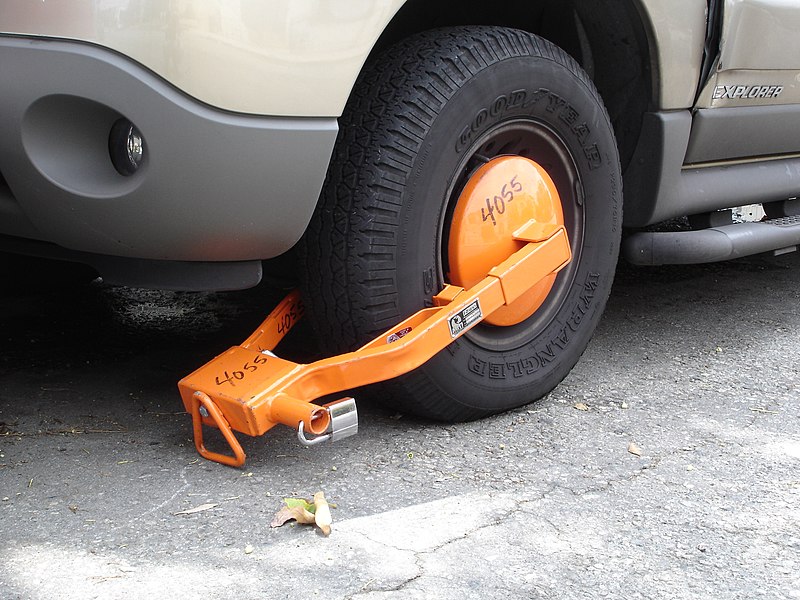
In the operating room, the team had to cut one end of rebar from the back of his leg to be able to pull out the other end that protruded from the front of his leg. They used what we used to use on construction sites, an abrasive disc cutter. An abrasive disc cutter looks like a chainsaw, but has a large circular abrasive disk made out of metal and composite that can cut through steel. It's the method Angle-Grinder Man uses to remove a Denver Boot without the key. As the cutter ground through the rebar, it threw a shower of sparks onto the patient and the arms of the operators. One team member was tasked with holding a metal shield over the man's genitals to keep them from being injured by the saw. Each time the saw blade hit the shield, it would emit a high pitched whine and vibrate the shield.
Once the rebar was divided and allowed to cool, it was easy to remove the remaining piece from his leg. It was the same as cutting the barb off a fishhook and removing the remaining wire, but on a grander scale. The bleeding muscle was treated and the ends of his broken thighbone were aligned with metal pins and a frame. He required treatment for other injuries on various parts of his body, then returned to the intensive care unit. Hopefully we will get him another step closer to well today.
Earlier today, I removed a retained bullet fragment from a soldier. It had been there a couple of months and was rubbing on a nerve. Usually we can leave all sorts of shrapnel in people because the body makes a tough wall around it. They usually cause them no worry at all. However, every once in a while, the foreign object stirs up some reaction and causes misery. It was tough to find the elusive piece of metal in his tissue. I had an x-ray to guide me, but I eventually found it by poking him with a needle and feeling the scratch as I made contact with the metal buried beneath his skin. Once found, it was quickly out. He's none the worse for wear and should be a lot more comfortable when he returns to duty.
The smaller fragments are toughest to find. It's tempting to try and remove them in the office with the patient awake, but I always go to the operating room. Sometimes it just takes a minute, but every once and awhile you find yourself struggling for hours as you hunt deep within someone's foot to find a needle they stepped on six months ago. A dear friend and honored mentor Pediatric surgeon R., taught me long ago never to attempt to take a foreign object out of a child in the office. I was caring for a boy who was playing with BB guns with his friends and had a ball bearing lodged in his forhead. It was right there under the surface of the skin, just teasing me. I followed his advice and did the removal in the operating room. That little ball bearing jogged left and right as I tried to pluck it out, and I was very happy that the child was asleep as I worked. I've since learned the wisdom of his words through experience. Even the the coolest teenager customer can become a wildman when you come at them with the numbing needle.
I've sadly neglected pumping iron in the yard, and am starting to feel small. As big as the embedded fragments are, I don't think they are going to take the place of some gym time. Sure surgery is important, but I think I'm going to have to hunt for some non-surgical steel to lift.
Be well and have fun!
Love,
Chris

27 October 2007

27 OCT 2007 Rise and boom

27 OCT 2007 Rise and boom


I have specifically avoided the topic of indirect fire, for several reasons. However, today was notable. I was peacefully racking at (redacted) this morning when the insurgents sent a wake up call in the form of a volley of three mortars. How kind of them to make sure that I got up in time for work. Honestly, guys, I have alarms in my pager and a battery-powered clock that is immune to our power outages, so you need not trouble your pretty little heads about it.


I choose not to talk about mortars and rockets, except for this blather of course, because there is no reason to give anyone at home a false impression that I'm in some kind of danger. Secondly, our defenses are extensive, but I have no wish to aid the enemy with any information that might give them a workaround. Suffice to say that we utilize numerous procedures along classic military doctrine to deny the enemy from the capability to attack, reduce the effectiveness of any attack, and maximize recovery and control damage after any successful attack. It's frustrating that I can't speak more specifically, because some of the tricks are really amazing technology.


The impacts were (redacted) from me, so I heard them, but didn't feel them much. The announcements came over the giant voice system directing our response. It is a recording of a woman's voice, and she sounds so serious! Her voice is pleasant , but monotone as she drones on "(redacted)." I didn't have far to go from bed to floor, and I began calculating if the attack would get me to work earlier or later. Many factors were involved. The insurgents had woken me before my alarm would have, which might get me in earlier. On the other hand, the recovery would interrupt the morning ritual, so if I wanted to smell acceptable and not have whiskers, I would head in later. Would the excuse "I'm late because I was mortared." work? Ah no. No excuses ever work. Our excuses are our own. There is no such thing as early, only on time, or late. I shaved quickly and postponed the shower.


It may seem that I'm taking the attack lightly, but I'm not. We are equipped and trained for this. Like my colleagues, I followed procedure, and we all arrived safely. I'm not claiming that I was safe because I watched the "duck and cover" video. I'm safe because the enemy does not have the freedom of maneuver or the materiel to aim straight. That's not by accident. We troops are a hard target, especially "Fobbits" like me. (The term refers to denizens of Forward Operating Bases. We Fobbits stay safe in the rear with the gear.) The unfortunate reality is that civilians are a much softer target and are suffering far greater misery at the hands of insurgents.


The attack did worry me slightly. I think I'll move my bunk to the floor. It's mainly a mental security blanket, when considered against the other defenses in place. At least I won't have to move when the klaxxons go off! It was a little stressful thinking what could happen on the extreme of probability. When I'm stressed, I have my itty bitty Buddha on my bedside table, thanks to B.! He's still laughing. And if I ever feel confused about the whys and how comes, It's a comforting perspective to know that at least Siddhartha would tell me that wherever I am at that moment in time is exactly where I'm supposed to be at that moment in time. Or as one of my first spiritual advisers, Alfred E. Neuman, would say, "What me worry?" (Illustration CR EC publications)


I suppose there must be a Buddhist or two on the base, be cause I see a column of incense continually rising from the dump to the (redacted) of us. It often wafts a perfume of burning vinyl, cardboard, and body parts over the hospital which perfectly sets the mood. When I am outdoors, I often take time to reflect on my station, and what the fumes must be doing to all of our lungs. I don't have to wonder long, because the government has provided a memo assuring us that the burn pit fumes are not dangerous to us, because we are exposed to them for less than a year.


It might seem like I'm joking about serious matters, and you are right! But what else can I do? No one could claim I don't understand the damage a mortar can do. I didn't choose this war, but I have chosen to keep the promise I made to serve. There were no conditions on that promise such as "unless they are launching mortars" or "unless the air is stinky." Once the war is over, we will go home and we won't be exposed to indirect fire or the burn pit. The main drive should not be to make war better, but to make war over. Nothing feels better than finishing.

Stay safe, friends, I miss you.

Chris

26 October 2007

26 OCT Doggy cologne

26 OCT Doggy cologne


It's Friday night, and I'm plugged into V.' MySpace site listening to "Cryin' in my Keyboard." Dude, did you have any idea how accurate that song was when you wrote it? There are a few patients in the OR with broken bones and the Orthopedic boys are pretty busy. Things move along here in Balad, and each sunrise imitates the prior one. They're all made out of ticky-tacky and they all look just the same. If I'm not needed at the hospital, I might bike down to the Sustainer Theater and catch "30 days of night." I should have a easier time dodging HMMWV's and Pathfinder's since I put a new headlight on the bike: "El Sol". It doesn't quite live up to it's name. At least I don't have to slap it back on after every bump like I did for the Pelican.


As usual, good news follows the bad. My patient who has had trouble with leaking from the repairs I have done on his intestine had more signs of leakage yesterday. The poor man has gotten so thin that he is little more than feathers over bone. We are working hard to get some good nutrition into him, but he heals slowly. At least he is still here. It is so hard to be patient when I want him well today! Now! I am cursed with impatience. He is usually sedated for comfort, but in his moments of lucidity he seems calm but bewildered at his predicament. I don't think a young man, even one in war, imagines that he would be trapped in a hospital bed, fighting for survival and troubled by tubes and wires throughout his body.


He reminds me of a little man I am hoping to treat in the upcoming months. He was born with an infection and needed a stoma bag to survive. In the many months since his birth, he hasn't put on much weight and you can see the bulges of his joints through his thin brittle skin. With the expert help of our dedicated Nutritionist S. we have sent him home with his father to be fed daily supplements and vitamins. It's been a few too many weeks since I've seen him and I'm starting to get nervous. In that time Nutritionist S. has enthusiastically tracked down other nutritional alternatives to give him the best chance to grow.


It is amazing how little we surgeons do. The amazing body does all the work. We may stitch a thing or two together, but with out the body's hard work delivering nutrients, trucking away waste, and defending against infection, nothing would ever heal. Be cruel to it or treat it kind, it's an extraordinary machine. That is why it is so frustrating and I am so powerless when the body is failing. I can only hang in there patiently and try to get the roots to take.


I did promise good news so I won't abandon you before delivering it. My little fried with the burns from his waist down is almost well enough to leave our nest and return to his home. His father has been doing his dressing changes, and we reduce the size of the dressing every day. More and more of his skin is healing over with shiny new waterproof intact skin. As the leak from his wound decreases, he grows stronger. His boggy swelling has all but disappeared and his appetite is growing. He still walks hunched over like a timid Yoda, but I think he just remains a little frightened. Nothing will be better than getting him home where he has to get off his butt and cross the room to reach his toys or dinner. It clears a cloud of fear and doubt from my heart to see his health returning. Once again, I did little. It was his extraordinary machine of a little boy's body that effected the miracle.


After I talked about the base's military working dogs, a friend offered to send over some sweet doggy treats. I didn't think they would allow it, but I promised to get a definite answer. While I was caching, I passed the Provost-Marshall's with the kennel next door. I stopped inside and was faced with a locked door and a smoky window. Suddenly I heard a voice that emanated from the ceiling, like the narrator in the Muppet Show's "Doctor Bob" skit. Like Dr. Bob and Nurse Piggy, my eyes darted around the little anteroom, searching for the source of the voice. "Where are you?" I asked.

"Behind the window" came the reply "we can see you and hear you."

I looked to the smoky window. I approached it closer. I pointed at the window and raised my eyebrows questioningly.


(as a brief aside, each time I append an adverb to a noun, I think of the old Tom Swift and Nancy Drew books with their unmistakable style. Unfortunately, I can think of no other way to express this. I raised my eyebrows, stared where I thought the speaker must be and tried to display a question in the features of my face, questioningly.)


"Yes, that's where we are. Now what do you want?" Now that I had my bearings I could tell that the man's voice was emanating from a gap filled with loose foam that ran under the width of the smoky window. On further examination I noted a sign handwritten in Sharpie to the right of the window that read "We are behind the window. We can see you and hear you."


I did my best to explain that I wanted to find out if a friend could send a care package of snacks to the military working dogs. The MP opened the window, revealing a fresh young face framed in close cropped reddish hair. He didn't know but he would call the kennel master right away, if I would just wait in the chairs.


Moments later a German Sheppard bounded into the room, leaped up to place his paws on my knees and began licking my face. She was such a friendly and excited dog, but I could tell by the bits of grey on her snout that she was a few years old. The kennel master, officer R., a seaman, followed quickly behind. As I expected, the dogs were on a strict diet but he was very appreciative that someone would want to give the them a little thank you from fans back home. He offered to email pictures but I told him that I was happy to do so since I had my camera on me.


I had so much fun playing with I. She was very friendly and affectionate and she made me realize how much I missed our standard poodle, L., back home. Of course when I talk to M. I hear that he is misbehaving, as you would expect an adolescent poodle would. He can be a real pain in the tookus, but I realized how much a part of the family he has become. Even though I biked home with a ripe bouquet of doggy cologne, I was happy to have a little puppy play time. It will be so good to be back with the whole family, regardless of species!
I track my progress toward homecoming on a Excel pie chart called the "Donut of Misery." Today I popped it open and it displayed "33% done". How fast it all passes! I will be very happy when only a little sliver of the donut remains and I can shake the dust of Balad from my boots! 'Till then, there's work to be done.


Over and out,


Chris


PS the Guy Raz NPR three part series on our medical system has come out if you are interested in learning more about how we care for injured troops.

25 October 2007

25 OCT Why I love the military, reason: 22


25 OCT Why I love the military, reason: 22

It might be time for another buzz. My hair is getting away from me. Luckily the care package that my sister A. and her coworkers sent has shaving gel and some triple blade razors. Ooh, how smooth I'll be!

My mount has a lame foot. Last night as I left the Air Force Theater Hospital, I noticed that my back wheel was riding a little low. As soon as I mounted, I felt that sinking feeling of grounding the rim on a completely flat tire. My bike was a generous pay-it-forward from Plastic surgeon M. who is happily and safely stateside. He warned me that the tires had a slow leak, Each week or so, I pump them up and go merrily on my way, but this was a full deflation. We've had a touch of vandalism lately. I entertained the though that perhaps the peace symbol on my helmet locked to my bike had invited commentary, but it was just a plain old leak. As it was midnight, and my patch kit was in the hooch, I rode the rim "home". Feh.

Today I borrowed the Czar Car and trekked to the PX. First I tried Army PX and them moved on to West side KBR PX. No luck, no inner tubes were to be found. In the usual pot pourri of random items I did find tubes for a 16" child's bike and one for a three speed beach cruiser, but none that would fit my Huffy mountain bike. This is how it goes at the PX. It has lots of stuff at good prices, but it is a pawed over lot of remnants like a Railroad Salvage. I need a new PT uniform (shorts and T-shirt) but I can only find petite Bruce Jenner shorts and a XXXL top that comes to my knees. Maybe I'll go gangsta. As for my bike, I had to settle for a hot glue patch kit and a tube of slime. Now I have my project for tonight. I can get the leak fixed (back tire, wouldn't you know it) in my own little bike clinic. It also needs the derailleur tightened, a new headlight that doesn't flicker, and I'm going to make fenders out of casting fiberglass. (The peanut butter mud is coming soon.) Of course the PX had new bikes for sale, but what is the fun in that? All I gots is time. But that's okay. I'm no doctor, but I do know this: You can't stop the clock.

What really gets me about the military is how they take every opportunity to go large. Yesterday we organized a hospital staff photograph on the helipad. We arranged for a medevac Blackhawk to park behind us. In true military fashion, instead of just climbing up a ladder, The photographer was perched in a ginormous construction cherry picker crane. We fell out into formation, taller tapped to line up by height, and then held formation for the next half hour. In that time, the crane operator moved the photographer up and down, scoochin' and oochin' to every possible position. For a nervous while he was precariously perched 40 feet over the head of all our commanders as the crane arm wobbled with the herky-jerky maneuvers of man at the helm, who probably didn't operate cranes at home. Then the crane broke and the basket wouldn't move up or down. Someone fetched a ladder in case we couldn't get the photographer out of his tree. After the backup compressor kicked in, the crane operator lowered the basket to a position eight feet above the ground. This, it turns out, was the ideal vantage point for the photograph. The photographer motioned for us all to "squeeze together", like at a birthday party at Uno's. If only we had gotten the ladder first, we wouldn't have needed the crane at all!

We surgeons stopped in front of the mural honoring the Tuskegee Airmen for a small group shot. Our Wing is named after the Tuskegee Airman and carries their number. It's our turn now. It will take a lot of heart and effort if we are to earn that name. I hope that our actions maintain the brilliance of that tradition so that a century from now they can look back and say that we earned the Tuskegee name and number.

Say cheese!

Chris

24 October 2007

24 OCT Just caching, officer

24 OCT Just caching, officer

Good afternoon. I've got a moment to chit chat before we go into conference. It is a warm windy afternoon in Balad. Already people are starting to wear the long pants of their physical training uniform. I don't use my air conditioner at night. The cold and rain is on its way.

Our famous Vascular surgeon M. seems to have momentarily lost his black cloud luck. He's gone from Eyore to Tiggr. He was on call last night and thankfully few were injured. One unfortunate story did however end in tragedy.
Last night a bunch of us worked hard to keep an eight month old girl alive after a head injury but she perished. My small part was to try and get a working intravenous catheter. Often in children this can be the most difficult task. Several of us were gathered around her, each of us armed with a needles, desparately searching for a vein. Eventually one of the anesthesiologists found the mark and we could start her therapy. Sadly, she had lost too much blood and we couldn't undo the damage. It is hard for me to care for children in this environment, so I can't even imagine how difficult and foreign it must be for my colleagues who are not providers for children back home. Fortunately there are a few awesome pediatric nurses scattered among the staff and they help the facility rise to the challenge.

Before the call to the hospital yesterday evening, I had been free to get some time away. I took advantage of the break in my duties to get out and cover some miles on my bike. I also got a good chance to put the worries of the hospital on hold while I went geocaching.

Not everyone has heard of geocaching. Before last year, neither had I. Geocaching is a sport where the player uses a global positioning satellite receiver to locate hidden items. Players hide items across the globe and then publish the coordinates on the Internet at sites like Geocaching. The boys and I have found a bunch around Texas, and when I logged on over here, I found that over 150 geocaches had been hidden in Iraq. After programming coordinates into my GPSr, I saddled up and hit the trail across base. I searched for five and found two. One other had been destroyed, but that's not surprising given the amount of construction and heavy equipment rolling around here. I've posted a picture of of one cache that was the size of a lip balm container and was hidden in a (redacted).


One touchy aspect of caching over here is that it looks suspicious when a suspect is walking around with an electronic device and poking into hidey holes around the bunkers. I have to make sure that I alert any authorities in the area of my presence, and it always helps to be social to curious onlookers. Plus, it represents an opportunity to share the sport with someone new. Often in geocaching, it is important to be stealthy, so as to not alert bystanders to the presence of the hidden cache. This is to prevent non-players from vandalizing it. If you didn't know the cache was there, you would never detect its presence. Who knows, there may be one on your own block! Just enter your zip code in at http://www.geocaching.com/ and I'll bet you find one within a mile of your house. I have reduced my stealthiness over her to avoid giving the wrong impression. But with my big biscuit head I don't think anyone would make the mistake of being threatened by me, anyway.


My father has questioned whether caching is actually a sport. He reasons that there is no ball, striking instrument, or time limit involved. I maintain it is a sport, and it can be physically challenging depending on the route you choose. On this last jaunt I biked about five miles, dodged a crane moving a barricade, and climbed up air conditioner conduit. If nothing else, it tops the aerobic output of darts.


Caching yesterday was a good way to take a mental break. I just wish I was back home caching with the boys! Soon enough. But then the call came in and it was back to reality, oops there goes sanity. The games we play to get us through.


Hope you find this post,


Chris


23 October 2007

23 OCT Cha Ching!

23 OCT Cha Ching!


Good Afternoon. Hope things are good with you. I'm just stopping to write for a spell before I leave the hospital. It has been an easy morning. We make rounds and tend to patients and nothing is too exciting. I have been preparing a report for morbidity and mortality conference. Things don't always go well after surgery. Sometimes we act when we shouldn't have, and other times we wait to long. Sometimes we make the right choice, but our hands and stitches don't fall just right. In any event, whatever happens to a patient in my care, being a surgeon means it is always my fault. I will be reporting on a man who had an infection after an operation I did. He is better now that the infection has been detected and treated. In morbidity and mortality conference I will describe my choices in front of my peers. They will give me their thoughts and advice. In this way, all will learn from the mistakes of one. That is surgery. The stakes are high, and mistakes are made, but to do nothing at all is death.


I've read a bit from "The Kitchen God's Wife" by Amy Tan this morning. Such a surprise to find that two characters are Chinese Air Force wives, following their men in the early days of World War Two. They move about as the military chases its tail in a battle against a superior Japanese Air Force. The women's fortune is no better or worse for the war, but the stress of the war brings the troubles in their lives to the surface. I think that is how it must be for all marriages. They may be strong or weak, and stress such as separation due to war doesn't change the core of the marriage, only illustrates it for what it truly is in a harsh light. I am a very lucky man. M. is my core. She is beautiful and strong.


Those of you not in the military may not know, but our corporation tries to quantify the personal risks and demands of war in financial terms. You may have heard of hazard pay in movies, but it isn't just a Hollywood fantasy. The other day I wove through the concrete bunkers to visit the helpful troops at the base finance office and start my Family Separation Allowance. No sum replaces the absence of a loved one, but the intention is appreciated. Here are some of the financial benefits of being sent to war:


Hostile Fire Pay/Imminent Danger Pay is given for any month you spend in a designated Imminent Danger area. It is $225 per month. The Combat Zone Tax Exclusion relieves you from paying income tax on wages you collect in a war zone. Hardship Duty Pay gives another $50-$150 per month depending upon how primative the camp. The Savings Deposit Program allows you to collect 10% interest on a portion of your pay you elect to deposit during your deployment. While deployed, you can also request a travel voucher accrual for each month. Anyone who travels for their corporation is probably familiar with this concept: the per diem. With the travel voucher accrual, you can claim your per diem each month as you earn it, rather than one lump sum at the end. Personally, I don't want anyone making interest on my money! The most bittersweet sum is the $250 Family Separation Allowance given to you for being away from your spouse and/or dependents.


I am immensely grateful that Congress has acknowledged that the rare honor of serving my country, separated from my family, is worthy of notice. The amounts are nice, but it is the fact that it is recognized at all that I appreicate. That brings up another point. I work for you. You have paid your taxes. They have gone into our national budget, and 67% of the $1.1 trillion dollar budget goes to national security and defense, some of which trickles it's way down into my pocket. Thank you for the job. Thank you for letting me work for you. I say this on my own behalf, and that of the less than 2% of the US population who choose to serve in the Armed Forces. But I can't stay here forever. I need to get back to my core.

Cin cin!


Chris

22 October 2007

22 OCT My selection bias

Good morning, Friends!

Hope today finds you well. It is a beautiful crisp clear morning over Balad. I'm gearing up for three operations on children, all secondary operations to get them closer to a strong enough state to get home or to an Iraqi facility. I find that nearly a majority of the operations I do over here are on children. That is fine with me, I trained in a career where all of my patients would be children if I had the choice. But of course, I have no objections to operating on adults. Striving for health and comfort for anyone is a worthy goal. Still, it seems like I am operating on more children than the last time I was here. I used to do 2-3 operations on children each week, now it seems like I do that many each day. However the scientist inside me says don't judge by impression, measure the data. I'm sure I do more operations on children than my peers do. This is because I seek out the cases on children, and my friends seek me out to do the operations on children. Ah, well, I'd gladly give it up if security improved and we could be out of the injured baby business.

I love to take care of children because they get better so fast! Just as I expected, the boy who got rid of his colostomy has done well. This morning, he had gotten out of bed to go to the widescreen TV to watch some football. He gave me a big smile when I greeted him. Now don't you believe it that you or me would still be whining the second day after a big belly operation! Our interpreter gave us the good news that he was "passing gasses." This is a big deal for surgeons. After an operation it is if the world turns on this question. How indelicate to be stuck in a hospital, sore from your operation, and every morning at an obscenely early hour a cluster of doctors comes in to ask you if you are passing wind. Such is the world of the surgeon's patient.

I passed by the darkened isolation room where the boy with severe burns died last week. I suppose I'll always see a fleeting image of him when I pass those windows. I proceeded on to the room of the other boy with burns. He is gaining strength every day and his skin grafts are taking like new sod in springtime. Two days ago I did his first dressing change after surgery to check his progress. His nurse had given him a sedative and pain medicine to make it easier, but he still looked up at us with fearful eyes and cried. The interpreter confirmed my impression that he wasn't in pain, but was just scared. One of our airmen strolls around the wards playing a guitar and singing. (It's not his official job, just a pleasant side benefit!) The nurses asked him to play outside the room while we changed the dressings. First he played "Hotel California", one of the interpreter's favorites. Not the most encouraging song for an impatient. Then he moved on to "I want to grow old with you" by Adam Sandler. It is such a pretty song, and I couldn't help murmuring along "I'll even let you hold the remote control." Another association my mind will always cling to.

Today we got this boy back on his feet. He stood crouched over like a catcher, too fearful to stand up straight. Bit by bit we coaxed him to an upright position. He took a few halting steps and stopped crying. I'm hoping to have him back in the nurturing circle of his family again soon. There are obstacles. I asked his father if he had a bathtub. No. I asked him if he had a reliable source of clean water. No. I am very fortunate that I have the backing of my commanders to continue this intensive burn treatment until I know the boy will be safe at home.

I've got to go prepare the OR for another skin graft I'm about to do. It's been nice to talk. Hope you have a great day!

V/R,

Chris

LTC Christopher Coppola, USAF
332 AEW/EMDG/OR
APO AE 09315-9997

DSN: 318-443-2925

christopher.coppola@blab.centaf.af.mil

21 October 2007

21 OCT Gone appetit

21 OCT Gone appetit


I've realized that I haven't discussed food much . That must seem odd for those of you who know me well. Honestly, I just feel busier here this time than I did last time, and haven't had time to think about it often. Maybe I'm just lazier!


Today was an easy as apple pie day, so it is a good opportunity to talk about food. I was on call last night, but didn't operate after evening. A few individuals arrived at the hospital, some of them patients, some of them doctors. We traded two surgeons with the Army and got two fresh new faces for the roster in return: M. and T. ! While they are here, Surgeons J. and S. are going to hang out in a hospital to the south. We demonstrated what scoundrels we are by putting M. on call today, just three hours after he arrived. Welcome to the party, M. ! They are great guys and their visit is going to be a good interchange of ideas. Our hospitals often treat the same patients, largely because our base is the point of departure for patients evacuated from the country. (Here are two great reviews of how our trauma system works: 1)trauma symposium at Balad, 2)development of the Iraq trauma network)


The patients were some US forces, some Iraqis, some with medical problems, some shot or blown up. For the most part they did well and did not require a lot of intervention. Since it is Sunday, we start a little later. I charted my patients at 0400 and then slept in until the crew arrived. After that, I had the day to myself. I've neglected my physical well-being through a run of busy days, so I tried to make up for it today. I did my fencing stretches, gained a few push ups closer to my 10,000 push ups tee-shirt, lifted at old man gym, ran, biked and swam. The water was actually cold, which felt great after five miles in the sun and breathing clouds of dust thrown at me by HMMWV's and Pathfinders. I had a chance to conduct "Dermatology Clinic" at the pool with B., S., and J. as we watched many killer tats pass this way and that.


Then, off we went in the czar-car pickup truck to our evening family dinner together at DFAC 3. It was a disappointment. Wasn't seafood night, wasn't Mongolian BBQ night, wasn't Indian night, wasn't even Stir Fry night. It was just plain old meatloaf night. Still, meat is meat, man's gotta eat! After about a week, you've seen just about every meal KBR has to offer. Seafood night is a bit of thrill as they toss out the giant crab legs. It's fun to use the nifty plastic claw pluck to free the meat. Extracting a leg muscle whole is a little victory. As I took this picture of Surgeon J. triumphantly holding up his prize, he said between his teeth, "Hurry up and take the picture, I want to eat it." This week, since surgeon S. is visiting the other hospital, I think KBR is going to have to reduce the amount of food they put out. S. is a bodybuilder who can train like a freak and he packs away a good amount of protein with each meal. He is kind of like Chuck Norris: when he does a push up, his body doesn't move up, the whole base moves down.


Understandably, we sometimes like to whet the appetite with a little variety. A good alternative to the hearty KBR fare is to have the air evacuation crews bring us back some brats from Germany. Surgeon S. has stocked a real "Grill Sergeant's" rig with BBQ, tools, and fixin's. All we need is to find the meat and we are ready to go. Adding near-beers to the marinade and the meal almost makes it taste like a summer evening at home.


One other way we step off the beaten path of meals is to share our care packages from home. My brother D. sent some tasty treats from his home in Thailand. Every package was a surprise as the illustrations aren't always clear. Oh yeah, I don't read Thai. The package with the smiling little boy on the box was a mystery, but I'm pretty sure that the contents were cookie-flavored bread sticks. Fortunately the package of dried shredded cuttlefish came with a translation because I'm not sure I would have tasted it without some warning. Who am I kidding, being the Italian boy I am, if someone puts it in front of me, I'll eat it!


Well, I'm not going to scoff at a chance to sleep tonight. As long as this lull lasts I'll eat well, sleep well and hope that people remain safe from harm. It would be nice if the casualties were over, but we're ready to help if they aren't.


Bon appetit!


Chris

20 October 2007

20 OCT Come see us at work

20 OCT Come see us at work

Ah yes, on call, and a moment's peace. We have enjoyed a temporary lull in the action and haven't had to run marathon days in the O.R. I've done a few operations today, admitted a few men to the hospital, but had time to enjoy three meals . That's a measure of a good day. I even had time to pee without having to wait for a break in operations. It may not sound important, but when there isn't time to visit a restroom, the day is too busy. It reminds me of one of the rules of residency. During a busy call night it is important to prioritize. Not just the patients, but also essential personal activities. They are, in order of importance, 1)Pee, 2)Call loved one, 3)Eat, 4)Sleep, 5)Shower. If you make it as far as #3 it is a good call night and you have nothing to complain about.

Yesterday's loss of the poor burned boy is a sad event that will stay with us, but we have to cowboy up and get back to work. Today was much nicer. Strengthened by kind wishes from home, I was able to get back into the fray. The morning had a great start with a smooth operation on a boy who was getting rid of his colostomy. I worked with Colorectal specialist J. who showed me some good tricks he uses in his practice back home. The boy had been using the bag on his belly to go to the bathroom for six months, after having been shot. Today was his graduation and we reconnected his intestines. Not only is it our victory, but it also is a credit to the work of the surgeons from the previous rotation who kept him alive at the time of his life-threatening injury. I visited him this afternoon to give him a coloring book and Crayolas sent to me from family at home. He was tired but looking good. He moved like a little old man in the bed , turning gingerly to avoid straining his sore abdominal muscles. I asked him how much it hurt and he held his index finger and thumb close together and clucked his tongue to tell me "just a little". It will be good to see him up and walking around the room soon.

I also worked on a girl who had suffered a serious penetrating head injury. She had not woken up, even after several days of treatment in our hospital. I put tubes in her to make it easier for her to breathe and eat while she was in this unresponsive state. She is still alive and I will maintain hope for her to wake up and start moving. I have been surprised in the past by children who have made amazing recoveries after head wounds that I was sure would kill them. If there is life there is hope. Children seem to have a remarkable ability to recover from injuries that would be hopeless in an adult. The young may not be immortal, but they try to be with every fiber of their being.

Later in the day, our general led a group of visitors through the hospital. Usually when a DV (distinguished visitor) tours through the hospital, we have some advance warning. One of the command sergeants walks ahead to make sure there isn't any embarrassing behavior going on. Most people take it as an opportunity to vacate the area and high-tail it out of there. When the advance warning came, I was entering patient notes into the computer, so I stood my ground and didn't flee with the rest. When our general entered the PLX, I rose to attention with the others present as he led members of the Congressional Armed Services Committee. They shook our hands, and thanked us for our service. There was nothing going on at the hospital at the time, so it looked like we were spending our deployment surfing the Internet. There was one trauma call during their visit, so the party relocated to the ER. It turned out to be a 10-month old baby who had been in a car accident the day before. He came to us escorted by six relatives. The just kept climbing out of the ambulance, one after another. He was crying vigorously, and had but a bump on his head. We ran some tests, comforted his mother and sent them all on their way back home.

I don't think I would recommend the trip, but we certainly do have a lot of visitors to the hospital. A few weeks ago I got to meet Adm Michael Mullen, Chairman of the Joint Chiefs of Staff. He came with quite a security detachment and we narrowly avoided missing dinner waiting for the convoy to clear the exit. He was very interested in the hospital and asked us questions about the work we did and how we thought we were able to get our jobs done. He was kind enough to give us his coin as recognition for our work. He had a straightforward and open manner about him and showed a true concern for us. He is one man who has a much tougher job than I do.

Prior to that we were also graced with a visit from Poison front man Bret Michaels. He dropped by the hospital to visit injured troops.He was kind enough to pose with us for pictures. His security was a mountain of a man who could have bounced in any roadhouse. Later that night Poison gave a wailin' show in the Sustainer Theater. Troops had lined up hours before and the crowd was SRO.

We are very appreciative when we have visitors. It is always an encouraging vote of confidence to know that we are remembered back home. I'm impressed that people would choose to risk their own safety to schlep it out to Balad. I worry for them. I remember once I was in Al-Udeid when a different Congressional delegation was visiting. One of the Congressmen asked a Sergeant at the terminal if there was anything Congress could do for him. He replied that they could stop sending Congressional delegations to Iraq, putting themselves and the aircrews at risk! His answer holds truth, but the concern for us is still appreciated!

I wish you well, and STAY SAFE, STAY HOME!

Love,

Chris

19 October 2007

19 OCT Nowhere to hide


19 OCT Nowhere to hide


Good evening. I can think of little today except the young boy who died this morning. He was one of the two boys I have been treating for serious burns. I left the hospital at 1300 this afternoon, but now I'm back at 2200 because I couldn't sleep in my hooch. I'm sorry to share bad news, but that's the only news I got. We all knew he had little chance of surviving the day he came to us. Even his father told me that he had thought he would die when we spoke today after his son's death. He had stumbled into a pile of burning leaves. His clothes ignited and severely burned his skin, turning it to a thick charred leather. For over a week now our staff has worked night and day trying to save him. The nurses put in such long hours at his bedside and it is so emotionally demanding to care for a burned child. I tried to choose the right course of therapy and timing of his operations but in the end I failed him. It just makes me feel empty. All last night he was struggling to get oxygen through his swollen lungs and his immune defenses began to fail. I visited him this morning. He was so ill that I cancelled the surgery I had planned for him. I didn't think he could make it through the day. He couldn't make it through the morning.


I was in surgery when he died. I was washing dead tissue away from an Iraqi soldier's leg stump. His leg had been blown off in an explosion two days ago. His body was peppered with small wounds where fragments of metal had entered his skin. His wounds were clean and he appeared to be healing. After surgery I found the boy's father. I spoke words to him. Interpreter J. translated them. The words didn't change anything. I had watched this man dying a little every day as he watched his boy's body swell, tubes coming out everywhere. When there were little victories, we shared them. One day his lungs worked better. Another his fever broke. Day after day I cleaned his burns and removed dead skin but found little sign that his whole body was improving. Now it is over. The father has gone home to his family with five other children. I think there is no escaping the fact that there will always be a hole where that beautiful little boy used to be.


Last night on backup call I had little to do. I spent the day working on men and women of various ages with wounds on various parts of their body. One boy had open wounds on his legs where the muscles had been to swollen and I was able to close them. Another boy was in the operating room for 13 hours while four different surgeons took their turns to remove his shattered eye, evacuate blood from around his brain, rebuild the fragments of his face with delicate metal bars, and painstakingly reconstruct the jigsaw pieces of his skin. I helped Oral surgeon L. reconstruct the tube in his cheek that made saliva. When the long marathon was over, he still was swollen, but his precious little face was whole again. His mother had been pacing and seeking updates on his condition for many hours. His whole family had been injured together. His father wasn't clear on what had happened. He told us that they had been away from home for several months. When they opened the front door of their house it was as if the entire house exploded into them blowing them backwards. They were seen at a forward base and rapidly flown to us in helocopters.


After finishing my operations, I sat around the hospital. People passed by me this way and that. Many asked me for directions since the surgeons' desk looks so much like an information desk. I worked for a little while on my MBA assignment on the Norwich University website but the connection was slow. People said hello but I didn't have much to offer. I wanted to be alone so I went back to my hooch. I skipped dinner and watched "The Fifth Element". Lelu multipass made me smile. Sleep didn't come. There was no hiding from my thoughts. So now I'm here. It honestly feels a little better to write this down even if it is a one way conversation and I'm dumping on you. Pain shared is halved and joy shared is doubled. I'll look for some joy to share next time. Tomorrow I'm operating on a boy who has had a stoma bag for 5 months after being shot in the belly. He has grown healthy enough to get rid of that colostomy and be made whole. that's a reason for joy, even if the recovery will hurt a little.


I miss you.


Chris

17 October 2007

17 OCT Everyone needs coverage

Hi, Friends!

Ah whew! It is the early afternoon and we actually finished out scheduled cases before midnight for once! That's even with Vascular surgeon M. on call, but I won't dwell on the point because that would tempt the fates to deliver a influx of patients. I operated on two men this morning who had been injured a few days ago, but needed their wounds washed and their open abdomens reconstructed step by step. Before that, I started the morning operating on two youngsters with burns. Both have been with us several days. One is still severly ill and spends his days in the intensive care unit, hooked up to life support. The other is on the ward and is able to take a few hesitating steps, flexing his burned legs. We are encouraging him to eat more protein so that his body can heal his opened layers of skin. He has beautiful long eyelashes and large round dark eyes. His father has bronzed skin that wrinkles around his mouth an eyes when he smiles. His face is roughened with sun and age and he wraps his head in white. Whenever I visit, he gives me a thumbs up and looks to me inquiring with his creased eyes if his boy is improving. I return the thumbs up and say "Zien", for "good" one of the few Arabic words that my age-addled brain has been able to commit to memory.

Each day our crew sedates these boys and I scrub the dead material off of their burns. Today was a good day. I did not see masses of gangrenous skin threatening infection. The wounds seeped bright red blood as I scraped, signaling to me that there was healthy blood flow that might in time heal the skin whole again. They will not be well until I give them adequate coverage, a new layer to defend them against the bacteria in our environment and keep in necessary hydration. Soon I will place skin grafts, shaved off of their own healthy skin, to further their healing.

The boy in the intensive care unit is more severly burned over more than half of his body. There are fewer patches of healthy skin available to us to move over the burns. Just today we received a shipment of artificial skin substitute from friends at a military burn hospital back home. I called them for help in the middle of the night and they hustled to help us out. I am hoping that this artificial skin will help tide this unfortunate boy over and give his body a chance to recover from the initial shock of the injury. It take a huge effort from many of our hospital's staff to give these kids the care they need. I am in awe of the dedication and professionalism of my colleagues. I don't know the future, but as long as they stay alive, I'll do my best to get them coverage.

Some of you really responded to the story abut the military working dogs. Tara Parker-Pope of the NY Times emailed me a great story about stray cats in Baghdad called "Nine Lives: What Cats Know About the War".

http://www.nytimes.com/2007/10/14/weekinreview/14burns.html?em&ex=1192680000&en=5c73eda5bd0f08c0&ei=5087%0A

 When I transported a patient to the Combat Support Hospital in Baghdad a few years ago, I spent the wee hours waiting for a helicopter in the recreation room in the basement. Every few moments, a cat would come in the ceiling level window, make a mad dash for  a morsel of food to steal, then head back out. I didn't see any rats, at least!

I hear "Trauma call in the ER, times five" so I'll sign off for now. Time to fly M.'s flag.

Take care and be safe!

Love,

Chris

LTC Christopher P. Coppola, USAF
332 AEW/EMDG/OR
APO AE 09315-9997

Christopher.coppola@blab.centaf.af.mil

DSN 318-443-2925

16 October 2007

16 OCT The comfort of nothing


16 OCT The comfort of nothing


My call night has passed, and thankfully there has been enough calm this morning that I could slip home for a shower. We were flying the black flag most of the night. Vascular surgeon M. Was on duty with me, and he just seems to have the knack for very busy black cloud call nights. Since we were running multiple operations at once, I was blessed with good help from my partners. You can see Laparoscopic surgeon S. has his hands scrubbed and is about to head into a case. He has the good sense to be wearing his splash goggles. He is wearing a cooling vest, because we heat the rooms to near 100deg to protect the patients who often are cold and are losing blood. Sometimes we need to wear lead shields through long operations in those hot rooms and we come out with our scrub suits drenched in sweat.


We finally finished the days' operations at 0200. After rounding on patients and seeing a few new visitors to the ER, I snuck in two hours sleep on the couch of the PLX.


The morning was smooth. After a quick breakfast of powdered eggs, rasberry yogurt, tomato juice and biscuits with sausage gravy, I gave my morning report as the DFAC coffee began to kick in. We had treated patients from six different nations last night. With the multinational force and contractors, there are individuals from all corners of the globe at risk for injury.


I arrived in the OR for my morning routine of washing and treating the two boys with severe burns. It is very labor intensive care. I had the good fortune to have three or four assistants in each operation. We scrubbed away dead skin and fat and placed new clean dressings to ward off infection. In spite of the physical and emotional demands of burn care on both patient and provider, my spirits were greatly lifted today to receive a strong message of support to press on with this work.


If you haven't, please visit a wonderful blog on health called Well by Tara Parker-Pope of the NY Times. She was kind enough to mention our work here, and is a great source of health advice and stories.


Afternoon has arrived, and I crossed a few chores off my card after editing proofs of an article and completing some business readings. I'm going to visit the OR to see if the on call team has the action under control. I'm hoping that they do becaue I'm looking forward to an afternoon in my hooch alone and the comfort of doing absolutely nothing for a spell.


Take good care of yourselves!


Chris


15 October 2007

15 OCT 2007 Give and take


15 OCT 2007 Give and take


Hi, all. I have quick moment now between operations. It has been a difficult morning. We come in each day, and we never know what sort of a wallop life holds in store.


Among the wounded we received today were a family that had been in a car wreck. There was a father, mother, and a baby girl. The father already had been intubated and sedated by the forward base. The mother was sore from her injuries, but fortunately they were not life threatening. Before them, the first one off the Blackhawk was the baby. She was unloaded first because she was the most severely injured. We had received advance notice that her head was injured and that the medics were using a machine to breathe for her. The crew rolled her into the ER and we secured her NATO gurney in one of the bays.


It was clear that she had suffered a major trauma to her head. She was swollen. She didn't respond to any touch or pain. Her eyes were dull and lifeless. Her monitor showed only a dying ripple of current in her heart, but there was no movement of blood through her veins. We gathered together surgeons and emergency doctors and agreed that she had no chance of surviving. We stopped the life support equipment and let her pass away. We thanked the medics for working so hard to bring her to us. We cleaned her body and removed the medical tubes that had been inserted.


I had to run tests on her mother and ensure that she had no major injury. Once I was sure that she was in no physical danger, I went to her with a translator to tell her that her child had died. A discussion like this rips my heart because it is a tragedy I cannot imagine for myself. I cannot even bear considering M. and I receiving such horrible news. I don't speak Arabic, but I did not need it to understand the news I gave this woman tore up her life . We brought her baby to her and helped her hold her close. Later we took the child to the morgue and admitted her mother to the hospital.


Such an event visibly shook the staff in the ER. We missed the people back home that we usually would have shared this with; those whose shoulders we would have leaned on. We didn't have much time to reflect because there were more patients to see.


There still are glimmers of happyness if you pursue them. We are caring for a young boy who was shot through the aorta, the largest artery in his belly. For days it was touch and go, but today he was stronger. He also gave us the surprise of showing us that he speaks English.


The newborn child has been able to spend much time with his mother as she gets better. The nurses on the ward have been calling him S., the same name as our urologist who operated on his mother. Today the mother told the nurses that she was going to keep that name, because she was so grateful for the care that she and her baby had received. Our hospital family and her family will be linked always, long after they have recovered enough to go home.


I'm off to start another operation. It has been a busy morning. I won't be so bold to wonder if that means the evening will be different.


Take good care of yourselves and love life,


Chris

Espresso morning

Hi!

I crashed hard last night after 7 cases, and I wanted to let you all know that things were cool here.

I'm on today, and I'm waiting in the ER for 5 casualties to arrive. Some start to the day. An hour ago, an explosion went of just off base: we heard it and felt it. Word is there was a 1000 lb IED detonated in Balad,  and there were civilian casualties. Their first source of medical care is Balad city hospital, but chances are we may receive some if they are overwhelmed. We are ready if so.

The newborn is doing so well. Everyone is trying to get by and get a chance to feed him a bottle. I found our Col in there the other day on the rocking chair, smiling widely with that little bundle of joy wrapped in his blue blanket.

His mother has done so well. She is well enough to breathe on her own, sit in a chair, and has held her baby.

Well the first injured man just rolled in.

Be well, we'll keep working hard over here.

Your man in Balad,

Chris

12 October 2007

12 OCT 2007 Our cover boy

12 OCT 2007 Our cover boy


Today was a good day of recuperation after steady work last night. Of course with the new day, new trauma victims began to trickle in, but nothing compared to the rush yesterday. Like all in life it runs in cycles. The tide is high, the tide is low.


A friend back home emailed me a nice article about the hospital that came out in Stars & Stripes. The next day, it was in the print version that is circulated around the base, and also throughout Europe and Centcom (the Middle East and Africa). We all got a kick out of the fact that Orthopedic surgeon E. was on the cover. His picture was much bigger than Charlise Thereon, "sexiest woman alive". (They got that one wrong; they must not know my baby!) Anyway, we had great fun teasing E. and asking him if he would still deign to work with us.


I've gotten such generous packages from back home! Yesterday I got an awesome box of snacks from my Uncle R! When someone sends me something, it goes to use. I got a sweet bundle of drawings from M. and the boys. One perfectly captured the relationship between the three boys. G. demonstrates his math ability by adding poison berries and strawberries. It went right on the locker. Many people have stopped to read it and ask, "What is he like?"


I also got a good poster from Mom to keep me company in the hooch. But I still have to thicken my moustache to complete the transformation to Borat.


You all take care!


Chris


11 October 2007

12 OCT Blue Blanket

11 OCT Blue Blanket

There is a brief pause in the action. We have been operating constantly since 0730 this morning. Now it is 2100. We know the reason, vascular surgeon M. is on call. He always has the busiest days. He has a black cloud hovering over him. He brings the rain. Monday we are on call together. I hope my karma overpowers his stool magnet.

I just finished an operation on a boy who stumbled into a fire. His house is a painted mud hut. There is a central cooking fire on the dirt floor. His father told us that they were burning leaves in the fire pit when the boy's clothes caught on fire. He is burned over more than half of his body. It is difficult to keep someone with such extensive burns alive. Perhaps if he was in a burn center he would have a better chance, but alas he is not. He is here with us. We will do our best.

*********

Whoops! I have to restart this letter to you. Now it is 0200 on 12 OCT. We had the sudden arrival of seven injured patients. They ranged in age from a boy less than a year old, who cried loudly as we tried to get a working IV in his arm, to a woman over fifty with shrapnel in her belly and leg. All of them had multiple fragments embedded in their bodies and required many x-rays and operations. I just got out of a four hour operation on the woman over fifty. It was a snap to fix the hole in her stomach, but it was a frustrating grind fixing the artery behind her knee. The artery is hidden there in a little tunnel and small veins wind around it like the insulation in a coaxial cable. The fragment had torn holes in both the artery and the vein and I assisted Vascular surgeon M. as he worked intently until the bleeding was controlled. I'm tired and I need a shower.

The two boys with burns that I am caring for really have me worried. Their care is very complicated and is requiring much expert care from many members of the team. I know how hard the nurses are working to get them well. Tomorrow I will operate again on both of them, like I expect I will need to for the next several weeks. Burns are such misery. It is hard to tend them. It only takes seconds for the burn to occur, and then months of misery to slowly work back to health. Some never make it back.

Demoralizing events occur, but we have to do our best, chin up, and hope for the best. Today, (or rather yesterday, I'm forgetting what time it is) gunmen fired on a bus full of women and young girls. We received many of the injured. Some weren't lucky enough to make it to the hospital. One of the injured was pregnant. This wasn't her first brush with misfortune. She had delivered two other children, but one had died of a brain tumor. Her pregnancy was eight months along, but her husband had been killed seven months ago. Bullets and fragments of metal had pierced her hip and entered the tissue of her uterus. She lay on her side, in pain from the contractions stimulated by the injury. We gathered as much information on her baby as we could; how did the ultrasound look, what was the heart rate. We collected all the help we could find; an Army pediatrician across base in a sick call clinic, an OB nurse working on the ward. We called friends in Baghdad and back home for advice.

After gearing up the team and heating up the operating room, we opened her belly and looked for damage caused by the bullet. The tissue of her uterus was bleeding and she was leaking urine. I carefully opened her uterus, releasing the waters. I felt her baby's head and quickly unwound the umbilical cord from where it was wrapped around the neck. The baby quickly slid out of her womb. My partners Urologist S. and Thoracic Surgeon J. helped cut the cord and I brought the baby over to where Pediatrician S. was waiting with E.R. doctor J. The baby was a beautifully formed boy, with rich brown hair and covered in a waxy coating. His skin was a frighteningly purplish hue. We cleared out his mucus, warmed him, jostled him, wiped him down, and pumped puffs of oxygen into his lungs until he drew breath and gave his first cry. With some grunts and a stream of oxygen across his face, pink color spread across his skin. We bundled him into a makeshift incubator fashioned from a crib wrapped with food service cellophane and heated with a hose from a warm air blower. His mother required more work in the OR to control bleeding, but was able to make it to the intensive care unit, heavily sedated and on life support a short time later.

The successful arrival of a baby was such a heartwarming and encouraging event in our little hospital. It seemed like nearly everyone drifted by to sneak a peek-a-loo. The lucky bedside nurses got to feed him his first meal, which he took well. We fussed over his numbers and vital signs. We scowled over complications that might occur and brainstormed for stratagems to ward them off. He seemed to pay our worries no mind. I rushed back to my hooch to bring him a blue receiving blanket that M. had knit and sent with me to Iraq in case a baby might need to be warmed. His freshly cleaned tiny features are a calming precious beauty in our utilitarian combat support hospital. If he can emerge safe from such a horrible event, perhaps there is hope for even better days to come.

Waiting for that day,

Chris

10 October 2007

10 OCT You're never fully dressed without a smile

10 OCT You're never fully dressed without a smile


Morning, all. I got off easy last night and did not get bombarded by too much work. Still, I don't rest as well during my call nights. If I am busy, that's easy, I just flow to and from from the operating room, working on one after another. When nothing is happening, I drift around the hospital, looking for trouble. Is there anyone in the ER? Have any Blackhawks radioed in? I visit postoperative patients in the ICU and see if their wounds or drainage bags show any signs of infection. I visit the interpreters to hear news of the surrounding towns. Usually I'll settle down for a movie or a three hour chunk of sleep. Of course, my hooch will never be home, but after the call night is over it is a quiet place to lay my head and forget the hospital for a few turns.


The toughest operation we did last night was work on an Iraqi policeman. He had been injured by shrapnel from a suicide bomber. One large fragment had entered his belly, tore holes in his intestine, and came to rest in the plump veins in front of his tailbone. When he rolled into the ER, he waved his arms about aimlessly and scanned the room with wide panic-stricken eyes. He appeared tired and his speech was confused. A small blob of fat protruded from the hole in his belly. His pulses was diminished and he shifted weakly on the NATO gurney.


We quickly transferred him to the OR where the anesthetist sedated him and placed a tube in his throat. As we prepared his belly for surgery, the team flushed bags of fluids and donated blood into his veins. Vascular surgeon M. and I widely opened his belly. A half a gallon of blood spilled out onto the sterile sheets and my boots. We quickly controlled this bleeding by bundling bulky cotton pads into his belly. We used a surgical stapler to close the multiple leaking holes in his intestine. He was starting to get cold which is dangerous. The cold would prevent his blood from clotting. After placing a watertight dressing with a drainage tube over the hole in his belly, we delivered him to the intensive care unit where he could be warmed and given more fluid.


Before and after that excitement, there were only gentle waves of activity in the hospital. Nurses and techs went from bed to bed giving patients the frequent gentle treatments that ensure that they will survive. We held a brief excercise to prepare resources in the event of a sudden surge in new patients. Surgeons S. and E. grilled bratwurst stewed in near-beer and onions. The brats were a gift the aeromedical evacuation team had brought from Germany. The company of surgeons headed out to the DFAC for dessert after offering to bring back a snack for the on call team.


So, after my sedate evening, we rounded and I presented the new patients to the team. There was a woman with some intestinal bleeding, a man with an infection in his injured eye, and others. Then I started the scheduled operations of the day to be done before I headed back to my hooch for a spell.


I'd mentioned before that I was treating a boy with a burn. He is five, and a week or so ago he stumbled into a cooking pot with boiling water that was on the floor of his family kitchen. He has had a rough go of it. I bring him to the operating room each day to scrub dead tissue off of his burns to prevent infection. Yesterday we were able to make a step forward in his progress. While he slept deeply under the anesthetic, surgical oncologist J. and I used a long blade to shave layers of dead burned skin off of his back, and then placed thin lacy slices of his own unburned skin over the wound. We stitched the healthy skin in place and covered it with a secure bulky dressing. I will see how well it is healing in four days. The new skin is like sodded grass on a bare lawn. It needs protection and hydration for a bit for the roots to take. Today I operated on him to once again scrub clean the burns elsewhere on his body. He knows me too well now and cries out for his father whenever he sees me coming to get him. Each day I work on him, I silently salute the nurses at specialized burn centers who treat severely burned patients day after day. It is emotionally demanding work.


Next I looked inside the belly of the man who had been injured by the suicide bomber. The bleeding had all but stopped. he was warmer, his hydration had improved, and his remaining intestine looked like it was healthy enough to survive. He will have a few more operations at our hands to get him all connected, but I feel he has made it over a serious obstacle by surviving the night.


Time in the OR is golden. No matter how tired I am, I feel fully focused and engaged. My mind works faster than my hands as I soak in the condition of the tissues, note the time elapsing, and do the calculations to search for the best choice of many possible treatments. I am a member of a skilled team; we work in concert. Staring down at a bloody incision isolated in a border of bright blue surgical towels holds the longing for home at bay. I forget how far I am from my family and gladly throw in my efforts to try and get one more out alive.


After surgery, there is more time, and my heart and thoughts return to my dear ones, so far away. I take great joy and satisfaction in getting this chance to rub shoulders with such incredible colleagues, but I will be marking time until I get home. M. sent me something to help when it is tough to smile. It's a smile on a stick. It looks a little sinister to me, like a carnival clown, but I supopose it will do until I can find my own a little easier at home.


Sleep well, I sure will today!


Chris


09 October 2007

9 OCT Shooting up

9 OCT Shooting up

We get to share the experience of many different troops here on LSA Anaconda. Some of them do far different jobs than I do. We have had the good fortune to have the company of a soldier who is spending time with us surgeons, gaining experience in the hospital which will let him better care for his platoon. He is one of the highly trained quiet professionals who are chosen for the more difficult tasks of the war. In his group, he has been selected as the medic and has honed his skill through training and much real world practice.

Here at the hospital, he hangs around with us as we loiter at the PLX, cruise the ER, and head back to the operating room with patients. Sometimes he will take the day shift, scrubbing in to help us stem the bleeding and clean the wounds of patients who are lifted in from the field Other times he spends the night in the hospital, helping treat the US troops who make a stop at our hospital for a last chance to stabilize their wounds before they ride the big bird out of the country to our evacuation hospital in Europe.

He is a quick learner, and very adept with his hands. It is clear that he has already done many of the procedures he practices with us: tracheostomy emergency breathing tubes in the neck, tubes in the chest to drain blood and reinflate the lungs, and suturing of lacerations. The difference is, he usually doesn't have all of the luxuries of clean working space, bright lights, and a well informed assistant with an abundance of supplies. He is usually working in a dark, dirty environment during an ongoing battle. He is very thoughtful and prepared and showed us a sparse field kit of instruments that would let him do the most with the least. I was very surprised to learn that on some missions, he actually inserts IV catheters into the team members so that they already have a good start if they are hit.

This man has a very young, casual appearance that belies his specialized tactical skills. His hair is medium brown and a bit longer than most of us, his eyes are attentive and bright, and his rounded cheeks frame a friendly smirk. He blends in well and contributes sparingly to conversations. Once we got him talking about techniques and missions and it was amazing to hear descriptions of his crew's ability to enter and control incredibly dangerous and chaotic environments.

He was kind enough to bring us to the shooting range across base one afternoon and we surgeons became his willing students. He is an incredible teacher because he has the gift of being able to convey instruction and correction verbally with out resorting to the defense of “here, give it to me and I'll show you”. He also had bountiful patience with our limited familiarity with the weapons and fighting stances. This patience is most reliable indicator of a great teacher.
Some of us were better than others with the automatic weapon. With the selector set to full-auto, I was amazed with the force with which the weapon pushed back. It was like trying to stand in chest deep water on Cape Cod when the tide is coming in. This shooting wasn't the measured cerebral target shooting we learned to qualify on our weapons on the pastoral range in Texas. He demonstrated aggressive and balanced postures and techniques that he used to respond to hostile environments and volatile situations. He told us how a full-throttle mindset and hyper-vigilance are as essential as technical weapon skills. He is yet another troop who has a far more difficult job than I do. I am thankful my life is guarded by such men and women.

When he explained anatomic targeting strategies it actually gave me an chilling perspective from which to analyze freshly wounded patients. It explained some of the patterns of injury I had seen and why the organs hit seemed to differ depending on if the patient was a member of coalition forces or a member of the insurgency. I appreciated this improvement in my ability to give the best care for those who come through my door. I hope that we surgeons measure up and give this soldier an edge or two keeping his troops alive if they have misfortune to encounter harm.

We have to be so proud of our military. Consider that 1.5% of the US population is throwing their lot in with Defense to keep all of us safe. I may be a military member, but most of the time I feel like I am receiving the great benefits of freedom with a far smaller sacrifice on my part. I just hope our whole country and the government itself never fails to value the lives of this willing population and guards their fate through thoughtful application of diplomacy and force.

07 October 2007

Guy Raz of NPR


Guy Raz of NPR, originally uploaded by ccoppola@pol.net.

Quite a staged photo, but you can see I was psyched to meet an NPR
celeb. <>

7 OCT How cool would it be to be a journalist!

7 OCT How cool would it be to be a journalist!
One of the comforts that I find no matter where I travel in the US is public radio. In any new city, I scan around the dial, usually in the low range of the AM band, until I find my NPR. If I’m not blasting a mix CD from M., I’ve got NPR on the sports bar speakers for the sluggish commute into the hospital and for the mad dash home.

We were chillin’ at the PLX last week when a member of the Air Force Public affairs team strolled in followed by a slim civilian with dark hair and whiskers framing his disarming face. We stood and exchanged pleasantries with Guy Raz of NPR. His voice was so familiar from the radio; it was like being surprised to find an old classmate in a strange city. He was visiting to gather material for a story. Guy has been in and out of Iraq since the start of the war and I have heard numerous intriguing reports from him.

He rode in from the field with a casualty. He observed and recorded us in the ER and the OR. When there were quiet moments, he would question us about injuries we saw, details of treatment, and our impressions. After dinner one night, we retired to the roof to watch departing aircraft drop flares and sample the fumes from the burn pit. Guy has interviewed nearly every combatant commander in Iraq and at the Pentagon. It was fascinating to hear his accounts of press conferences and private family life in Baghdad. We talked about apartments in D.C. which made me miss the East Coast dearly. 

I wish him safe journey home and I hope I will have a chance to hear his perspective on our care of troops and civilians here in Balad.

Be well, rest easy, and support public broadcasting!
Warm regards,
Chris
More on Guy:
http://www.npr.org/templates/story/story.php?storyId=6597623